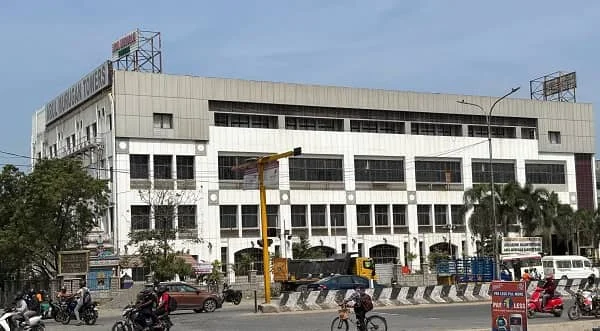
Mittal Tower stands in Nariman Point, developed by Mittal Builders in what remains one of Asia’s most expensive commercial real estate markets, sitting on the southern tip of Mumbai’s peninsula alongside landmark neighbours like Express Towers, the Air India Building, and Nariman Bhavan. For anyone doing business in South Mumbai’s traditional financial heart, this address carries genuine prestige, even as the city’s commercial centre of gravity has shifted considerably toward Bandra Kurla Complex and Lower Parel over the past two decades.

| Building Detail | Information |
| Building Name | Mittal Tower |
| Developer | Mittal Builders (Mittal Group) |
| Address | Nariman Point, Mumbai, Maharashtra 400021 |
| Locality | Nariman Point, South Mumbai’s traditional financial district |
| Building Use | Commercial office space |
| Nearby Landmarks | Express Towers, Air India Building, Free Press House, Tulsiani Chambers, Nariman Bhavan |
| Nearest Railway Station | Churchgate, approximately 0.9-1.6 km depending on the route |
| Nearest Metro | Vidhan Bhavan Station, Line 3, roughly 0.4-1.9 km |
Understanding Nariman Point’s Legacy as Mumbai’s Original Financial District
Nariman Point occupies a genuinely distinctive place in Mumbai’s history — the entire area was built on land reclaimed from the sea between the 1940s and 1970s, and for decades it stood as India’s single most expensive and prestigious commercial address, often described as Mumbai’s answer to Manhattan. The locality takes its name from Khurshed Framji Nariman, a Parsi freedom fighter and Bombay’s first Indian-born Municipal Corporation president, and it’s bordered by Churchgate to the north, the Arabian Sea to the west and south, and Colaba to the east. Mittal Tower sits within this historic business core, alongside a cluster of similarly iconic towers that together defined Mumbai’s corporate skyline for much of the twentieth century.
Understanding the Address Itself
It’s worth flagging one thing upfront for anyone searching this address online — several unrelated listings under similar names occasionally surface for locations like Andheri East, but these refer to entirely different, unconnected properties. The genuine Mittal Tower discussed here sits specifically within Nariman Point’s core commercial cluster, close to other well-known buildings including Free Press House, Tulsiani Chambers, and Nariman Bhavan, all recognisable South Mumbai commercial addresses in their own right.
Reaching Mittal Tower
By Rail – Churchgate station, the southern terminus of the Western Line, is the standard rail gateway to Nariman Point, with walking distance estimates ranging from roughly 0.9 to 1.6 kilometres depending on the exact route taken and which part of Nariman Point you’re heading to. For those coming from the Harbour or Central lines, Chhatrapati Shivaji Maharaj Terminus sits a bit further, generally requiring a taxi or bus for the onward journey.
By Metro – Vidhan Bhavan station on Line 3, Mumbai’s underground Aqua Line, serves this area, with distance estimates varying between sources from as close as 0.4 kilometres to nearly 1.9 kilometres depending on exactly where within Nariman Point you’re measuring from. Line 3 also offers a direct out-of-system interchange with Churchgate station, giving visitors a genuinely useful combination of rail and metro options for reaching this address from across the city.
By Road – BEST buses run frequently through Nariman Point, with several routes including 138 and 141 connecting from Churchgate. Taxis remain a popular and often necessary option, particularly for visitors carrying luggage or unfamiliar with the area’s layout.
By Sea – For a genuinely distinctive Mumbai experience, the Gateway of India ferry terminal in Colaba sits roughly an 18-minute walk from Nariman Point, offering an alternative, scenic route for those coming from across the harbour.
Why Nariman Point Retains Its Commercial Prestige Despite Newer Business Districts
A few specific factors explain why an address like Mittal Tower continues to hold genuine value even as Mumbai’s commercial energy has diversified toward newer business hubs.
- Its historic status as India’s most expensive commercial real estate market for decades has left Nariman Point with an enduring reputation that newer districts like BKC, despite their scale, haven’t fully displaced for certain kinds of legacy businesses, law firms, and financial institutions.
- The area’s genuinely spectacular setting, with the Arabian Sea, Marine Drive, and Back Bay all within immediate reach, gives this address a quality of life advantage that purely functional commercial districts elsewhere in Mumbai simply can’t replicate.
- Proximity to landmark neighbours including the Air India Building, Express Towers, and the National Centre for the Performing Arts places Mittal Tower within an area of genuine architectural and cultural significance, not just commercial density.
- Nariman Point’s direct connection to Churchgate, one of Mumbai’s busiest and most historic railway termini since 1870, gives the area deep-rooted transit infrastructure that’s been serving this business district for well over a century.
What’s Changing in Nariman Point’s Connectivity
It’s worth understanding that Nariman Point’s transport story has genuinely improved in recent years, and this matters for anyone evaluating the address today versus a decade ago.
- Mumbai Metro Line 3, which was still under construction as recently as a few years ago, has now brought a functioning underground metro option to this part of South Mumbai for the first time, meaningfully supplementing the area’s historic reliance on suburban rail and road transport alone.
- The metro’s out-of-system interchange at Churchgate means visitors arriving via the Western Line suburban network can now combine that with Line 3 access toward Cuffe Parade, adding genuine flexibility that simply didn’t exist before.
- Despite these improvements, Nariman Point still lacks a train station of its own, so anyone planning regular visits should factor in the combination of a rail or metro trip followed by a short walk, bus, or taxi ride to complete the journey.
Localities and Landmarks Around Mittal Tower
- Churchgate — immediately to the north, one of Mumbai’s most significant transit hubs and a historic commercial locality in its own right.
- Colaba — bordering Nariman Point to the east, home to the Gateway of India, Taj Mahal Palace, and Mumbai’s most recognisable tourist landmarks.
- Marine Drive — running along Nariman Point’s western edge, Mumbai’s iconic seafront promenade offering views of the Arabian Sea and the city’s famous nighttime “Queen’s Necklace” lighting.
- Fort — a short distance away, home to the Bombay High Court and several colonial-era architectural landmarks.
Everyday Amenities Around Nariman Point
Decades as Mumbai’s premier business district have left Nariman Point with a genuinely comprehensive set of amenities, even as some of the area’s original grandeur has been challenged by newer commercial competition.
- Luxury five-star hotels line the area, including properties directly on Marine Drive offering some of Mumbai’s most sought-after sea views for business travellers and visiting executives.
- The National Centre for the Performing Arts (NCPA), located at the tip of Nariman Point, hosts world-class cultural events, giving the area a genuine cultural dimension beyond its purely commercial character.
- Numerous restaurants and cafes, ranging from long-established institutions to newer establishments, cater to the steady flow of office workers and visitors throughout the business district.
- The Marine Drive seafront itself functions as a significant recreational amenity, drawing crowds especially during monsoon season when large waves crash against the sea wall, and offering a genuine escape from office life within walking distance of most Nariman Point buildings.
Practical Notes Before You Visit
A little planning helps considerably when navigating this historic but occasionally traffic-dense corner of South Mumbai.
- Since Nariman Point doesn’t have a dedicated railway station of its own, plan your journey as a combination — typically Churchgate by rail, followed by a short walk, bus, or taxi for the final stretch, or alternatively the newer Line 3 metro option via Vidhan Bhavan station.
- Confirm you’re heading to the genuine Nariman Point address rather than any unrelated listing that occasionally surfaces under similar names in other parts of the city, since these refer to entirely different properties.
- Given Nariman Point’s dense concentration of major office towers, confirm the exact floor and company name with your host before visiting, and allow extra time during Mumbai’s characteristically heavy morning and evening rush hours.
- If you’re combining a business visit with some sightseeing, the walk along Marine Drive toward Chowpatty or in the direction of Colaba and the Gateway of India is genuinely one of Mumbai’s most rewarding urban walks, and it starts right from Nariman Point’s doorstep.
Frequently Asked Questions
Q1. Is Nariman Point still considered Mumbai’s premier business district?
It remains one of India’s most prestigious commercial addresses, historically the country’s most expensive real estate market, though Mumbai’s overall commercial centre has diversified considerably toward Bandra Kurla Complex and other newer districts over the past two decades.
Q2. How do I reach Mittal Tower without a car?
Churchgate station on the Western Line is the standard rail gateway, roughly a 15-25 minute walk depending on your exact route, and it now connects to Mumbai Metro Line 3 via an out-of-system interchange at Vidhan Bhavan station for additional flexibility.
Q3. Does Nariman Point have its own railway or metro station?
No dedicated railway station serves Nariman Point directly, though the recently developed Metro Line 3 has brought Vidhan Bhavan station within a reasonable distance, genuinely improving the area’s transport options compared to just a few years ago.
Q4. What makes Nariman Point worth visiting beyond just business meetings?
The Marine Drive seafront, National Centre for the Performing Arts, and proximity to Colaba’s Gateway of India and Taj Mahal Palace give this business district a genuine cultural and scenic dimension that most purely commercial areas in Mumbai simply don’t offer.