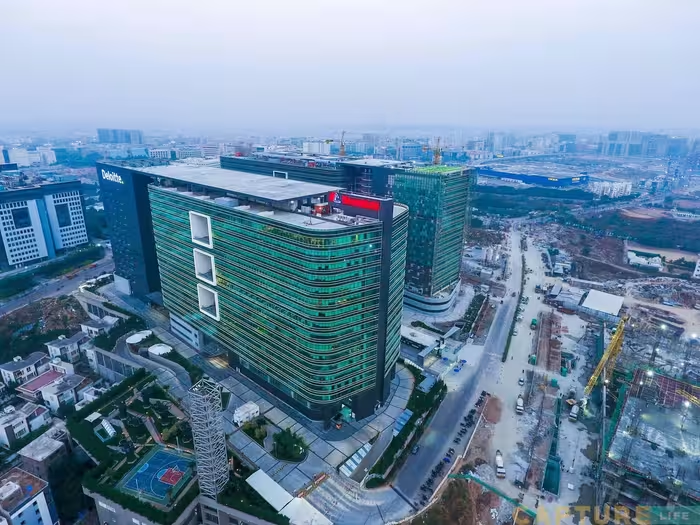
Finding Accenture BDC7 Tower A & B for the first time can be genuinely confusing — Bengaluru’s Outer Ring Road stretch is dotted with lookalike tech parks, and this campus sits inside a business zone that goes by three or four different names depending on which map app you’re using. This piece cuts through that confusion and lays out the exact address, transport options, and the neighbourhoods clustered around it.

|
Quick Reference |
Details |
|
Building Name |
Accenture BDC7, Tower A & Tower B |
|
Complex |
Pritech Park SEZ, RMZ Ecoworld / Ecospace vicinity |
|
Full Address |
No. 7, Pritech Park SEZ, Varthur Hobli, Outer Ring Road, Bellandur, Bengaluru, Karnataka 560103 |
|
City Zone |
Eastern Bengaluru, ORR IT corridor |
|
Nearest Operational Metro |
Central Silk Board / Bommanahalli (Yellow Line), approx. 4–5 km |
|
Upcoming Metro Station |
Bellandur (Blue Line, Namma Metro) — under construction, targeted for late 2026 |
|
Nearest Airport |
Kempegowda International Airport, Bengaluru |
|
Occupant |
Accenture (delivery centre operations) |
Locating the Campus: Which “Accenture Bengaluru” Is This?
Accenture runs several delivery centres across Bengaluru, and BDC7 is one specific campus among them — not to be confused with BDC1 or other numbered blocks elsewhere in the city. This one sits within the Pritech Park Special Economic Zone, part of the wider RMZ Ecoworld and Ecospace business district near Bellandur. If you’re coordinating a cab pickup or sharing directions with a candidate, mentioning “BDC7, Pritech Park, ORR” avoids the mix-up that “Accenture Bengaluru” alone tends to cause.
The postal listings you’ll come across sometimes list the address slightly differently — some tag it under Varthur Hobli, others under Bellandur village boundaries — but they all point to the same physical location just off the Outer Ring Road, wedged between Marathahalli and Sarjapur Road.
Getting There: Transport Options by Mode
Road
This stretch of ORR carries some of the heaviest office-hour traffic in the city, so timing your commute matters more here than almost anywhere else in Bengaluru.
· Direct access from the Outer Ring Road connects the campus to Marathahalli, HSR Layout, Koramangala, and Sarjapur Road.
· Peak congestion typically runs 8:30–10:30 AM and 6–9 PM, especially near the Kadubeesanahalli and Bellandur junctions.
· Cabs, autos, and bike taxis (Ola, Uber, Rapido) operate heavily along this corridor throughout the day.
Metro
Here’s where expectations need adjusting. There’s currently no operational metro station within walking distance. The Bellandur station, being built under Phase 2A of the Blue Line, will eventually sit close to Ecospace — but as of now it remains under construction, with an expected opening later in 2026. Until it opens, commuters rely on:
· Central Silk Board or Bommanahalli stations on the Yellow Line, roughly 4–5 km away
· Hoodi station on the Purple Line, around 3 km away, on the opposite side of the corridor
Either way, you’re looking at an auto or cab ride to bridge the last stretch — this isn’t a “walk from the metro” campus yet.
Bus
BMTC services run frequently along ORR, with Eco Space and Kaikondrahalli among the nearer stops, both roughly a ten-minute walk from the towers.
Air
Kempegowda International Airport connects to this part of the city via NH 44 and the ORR link roads. Airport taxis and buses to Silk Board or Bellandur are the standard route in; expect the drive to run well over an hour during heavy traffic, since this is one of the longer airport approaches in the city.
Why This Stretch of ORR Became an IT Magnet
Bellandur wasn’t always corporate territory — it grew into one because of a fairly specific chain of events.
- Large SEZ campuses like RMZ Ecoworld and Ecospace anchored early tenants here, and once Accenture, Intel, and others committed, smaller vendors and support businesses followed naturally.
- The Outer Ring Road gave companies a single artery connecting to Whitefield, Koramangala, and the Electronic City belt without needing to cut through the older city core.
- Rental housing exploded across HSR Layout, Sarjapur Road, and parts of Whitefield specifically to serve this office cluster, which in turn made the area self-sustaining.
None of this happened by design from a single planning authority — it’s the product of successive companies picking the same corridor because their competitors already had.
Neighbourhoods and Areas Around the Campus
Employees and visitors typically end up moving between a fairly consistent set of areas:
- Bellandur — the immediate locality, known equally for its IT parks and its long-troubled lake, now home to dense apartment complexes catering to the working population here.
- Marathahalli — a few kilometres north, offering more affordable housing and a much older, more established retail scene.
- Sarjapur Road — south of the campus, increasingly popular with younger professionals for its newer apartment stock and expanding social infrastructure.
- HSR Layout — a well-established residential neighbourhood a short drive away, favoured for its planned layout and easy weekend access to Koramangala.
- Whitefield — further east, relevant mainly for those working across multiple tech parks in the broader eastern IT belt.
What’s Around the Immediate Vicinity
The campus doesn’t exist in isolation — the surrounding stretch has built up considerably to support the workforce.
- Dining — Ecospace and the surrounding lanes host a dense mix of cafes, quick-service chains, and casual dining spots aimed squarely at office crowds.
- Retail — Total Mall and a handful of smaller shopping centres along Sarjapur Road serve weekend shopping needs without requiring a trip into the city centre.
- Healthcare — Multiple clinics and diagnostic centres operate within the Bellandur–Marathahalli stretch, along with larger hospitals accessible via a short drive.
- Co-living and PG housing — Given how many employees relocate here from other cities, the area has a dense concentration of PGs and co-living spaces within walking or short-auto distance of the towers.
Practical Notes Before You Head There
A handful of things are worth knowing if this is your first visit, whether for an interview or a client meeting.
- Confirm whether you need Tower A or Tower B specifically — security check-in procedures differ slightly between the two, and campus staff won’t redirect you once you’re checked in at the wrong entrance.
- Traffic on ORR near Kadubeesanahalli can add 20–30 minutes to what looks like a short trip on the map; build that buffer into your schedule.
- Since the Bellandur metro station isn’t running yet, don’t plan your commute around it — check current status closer to your travel date if you’re relying on public transport for a long-term commute.
Frequently Asked Questions
Q. Is there a metro station within walking distance of Accenture BDC7?
Not yet. The Bellandur metro station on the Blue Line is still under construction and expected to open later in 2026. Until then, the nearest operational stations are Central Silk Board and Hoodi, both requiring a cab or auto for the final stretch.
Q. How different is BDC7 from Accenture’s other Bengaluru offices?
BDC7 is a specific campus within Pritech Park SEZ near Bellandur, distinct from Accenture’s other delivery centres elsewhere in the city. Always confirm the building name and tower letter when scheduling a visit, since directions for one campus won’t work for another.
Q. What’s the most reliable way to commute daily if I don’t drive?
Most non-driving employees rely on BMTC buses to Eco Space or Kaikondrahalli, combined with app-based cabs or autos for the last stretch, since the area currently lacks direct metro access.
Q. How far is the campus from central Bengaluru areas like MG Road?
It’s roughly 12–15 km from the MG Road area, but travel time matters more than distance here — expect 45 minutes to over an hour depending on traffic conditions on ORR, especially during office peak hours.